
A sacred walking pilgrimage across the north-flowing Narmada River.
Rivers don’t usually flow north in India. But, River Narmada, on its course from east to west, turns north along a quiet stretch near Bharuch. It seems as if it pauses for a while, taking its time before meeting the sea. It is here, in this rare उत्तरवाहिनी (north-flowing) form, that a lesser-known parikrama begins. Instead of the entire Narmada Parikrama journey that takes months, this is a shorter walk that understands devotion not as distance covered, but as presence felt.
What is Uttarvahini?
In Sanskrit, uttarvahini means “flowing north.” However, in the spiritual fabric of India, it carries a deeper meaning. Traditionally, the north has long been associated with auspicious energy, the direction of the Himalayas, of wisdom, of something higher than the everyday. Therefore, when a river like the Narmada, which otherwise flows westward, briefly turns north, it is not seen as a mere geographical feature, but as a moment of heightened sanctity. For pilgrims, in turn, this transforms the river into something even more sacred, and an opportunity to circumambulate it when it is believed to be closest to the path of moksha (liberation).
What is Uttarvahini Narmada Parikrama?
The Uttarvahini Narmada Parikrama, often referred to as the Panchkoshi Parikrama, is a short, well-defined pilgrimage undertaken along the north-flowing stretch of the Narmada in Gujarat. Typically covering a loop of around 14–15 kilometres, the route begins near Rampura village, passes through key ghats such as Shehrav, Tilakwada, and Rengan, and returns along the opposite bank, forming a complete circuit. Traditionally performed on foot during the Hindu month of Chaitra, the parikrama is usually completed within 5-6 hours, with thousands of devotees participating each year. Despite its shorter distance, it follows the same fundamental principle of a parikrama—circumambulating the sacred—offering a structured and accessible alternative to the much longer 3600 kilometres Narmada Parikrama.
Spiritual importance of Uttarvahini Narmada Parikrama
“Ganga Snan, Yamuna Paan, Taapi Smaran, Rewa (Narmada) Darshan”
(A dip in the Ganges, a sip from the Yamuna, chanting of Taapi, and witnessing of Rewa)
This ancient saying captures the importance of the Narmada in spiritual tradition. In contrast to other rivers that are revered through ritual acts, the Narmada is believed to bless simply through darshan, a glimpse of her flowing form.
When the Narmada turns north near Bharuch, it is believed to amplify the spiritual merit of any prayer or ritual performed along its banks. Many devotees hold that walking this parikrama or even taking a dip here carries a significance comparable to bathing in the Ganga—an act of purification and पुण्य. For those who may not be able to commit to the demanding, months-long full Narmada Parikrama, this becomes a powerful and accessible alternative, a shorter path yet a meaningful experience of devotion, depth, and connection with the river.
Route of Uttarvahini Narmada Parikrama
Most pilgrims begin from either Rampura or Tilakwada, walking clockwise along the riverbank through a series of small villages, sacred ghats, and significant temples.
- Rampura – Mangrol – Tilakwada – Vasan – Rengan – Rampura
- Tilakwada – Vasan – Rengan – Rampura – Mangrol – Tilakwada
Click on your preferred starting point for driving directions: Rampura / Tilakwada
Both Rampura and Tilakwada have parking facilities available.
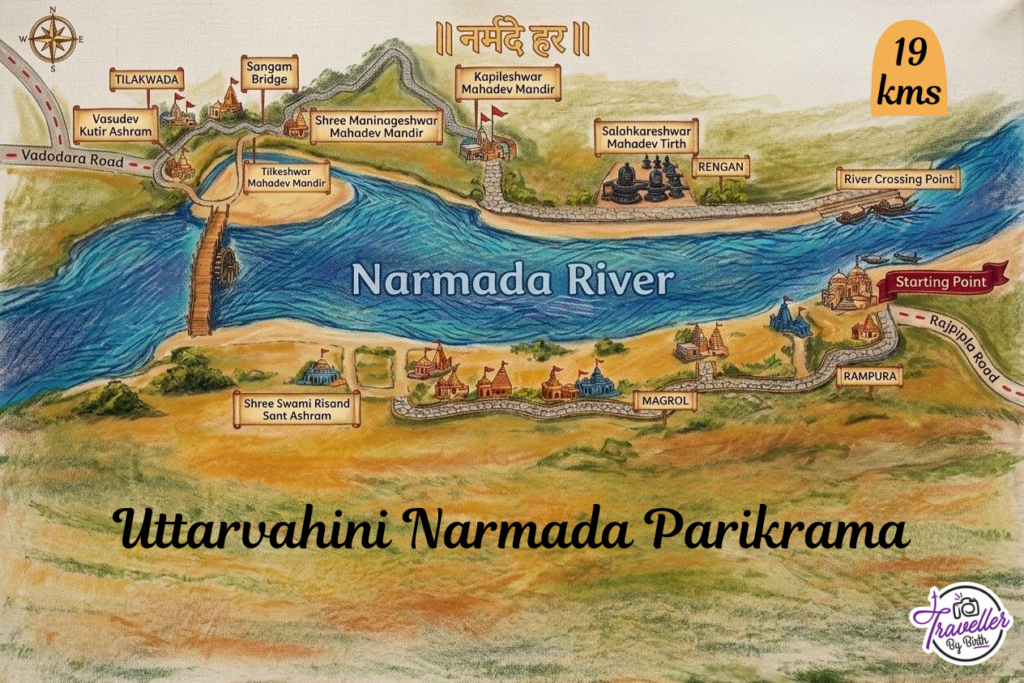
The path stays close to the river for the most part, alternating between paved sections through banana fields, dusty riverbank trails, and narrow village lanes. Depending on the exact route and starting point, the full circuit usually spans around 14 to 21 kilometres. The route crosses the river twice: near Tilakwada on a sandbag bridge, and near Rampura on the boat.
It’s not a marked trail in the conventional sense, but the presence of fellow pilgrims, temple stops, and the constant sight of the river make it easy to follow, almost as if the Narmada herself is guiding the way.
Walking the Uttarvahini Narmada Parikrama: A Handy Guide
- Best Time to Visit: Uttarvahini Narmada Parikrama opens for the pilgrims during the Chaitra month. During this time, you can start walking anytime you want. For the best experience, you can opt to walk either early in the morning or late at night to witness the sunrise or sunset by the Narmada River. To avoid the rush, choose to walk during the weekdays.
- Duration: Typically completed within 5–8 hours, depending on your pace and halts.
- Distance: Approximately 18 to 21 km, depending on the exact route you follow along the Uttarvahini stretch near Bharuch.
- Fees:
- Car parking: INR 100/-
- Boat Ticket: INR 50/- per person
- Who Can Do It: Suitable for most people of any age group. You’ll find a wide mix of devotees along the way.
- What to Carry:
- Water bottle
- Small cloth/towel
- Comfortable footwear (many prefer walking barefoot)
- A pair of extra clothes (optional)
- Torch/flashlight
- ID proof and some cash
- Route Etiquettes:
- Walk mindfully along with other pilgrims; avoid rushing.
- Respect local customs and temple spaces.
- Keep the route clean and carry your trash along until you find a dustbin.
- Facilities on the Way: Small tea stalls, local vendors, and water filling stations are available intermittently. Along the way, villagers, temples, and ashrams willingly offer free tea and snacks throughout the parikrama route as a part of seva.
- Pace & Approach: There’s no right speed for the parikrama. Take pauses, sit by the river, explore temples and ashrams on the way, and feel the divine experience slowly.
How can Uttarvahini Narmada Parikrama be done by yourself?
There’s a lot of confusion on social media about whether this parikrama can be done on your own or if a guide is needed.
In my opinion, you can do this completely on your own without any difficulties. Follow these simple steps:
- Find your nearest starting point (Rampura or Tilakwada)
- Drive there by yourself, rent a car, or travel by a GSRTC bus from either Bharuch or Vadodara. (This is the trickiest part, and that’s why most pilgrims opt for tour companies that provide commute services)
- Once you reach there, park in the designated parking lot, and follow the designated path. There are tons of directional boards placed on the entire route for guidance.
Driving back home after the parikrama can also be challenging, mainly because walking nearly 20 kms straight can be tiring. That said, it’s not impossible and is doable for some. In my experience, this parikrama left me refreshed, and I was able to drive back to Bharuch without any trouble.
Things to remember before going on the Uttarvahini Narmada Parikrama
- Due to long queues and the increasing number of pilgrims, the government has made registration compulsory. Complete your registration here, and either print the QR code or keep it handy on your phone, along with your valid ID proof.
- Every year, the crowd keeps getting bigger, especially during the weekends and public holidays. If possible, avoid going during those days, and if you do, prepare yourself for a long wait, as the police regulate the crowd systematically.
Temples & Ashrams through the Uttarvahini Narmada Parikrama route
Follow this list if you are starting your parikrama from Rampura.
- Ranchhodrai Temple
- Harsiddhi Mata Temple
- Lokeshwar Mahadev Temple
- Shree Mangaleshwar Mahadev Temple
- Udasin Ashram
- Tapovan Ashram
- Hanuman Temple
- Gopaleshwar Mahadev Temple
- Shree Swami Ramanand Sant Ashram
- Sitaram Bapu Ashram
- Vasudev Kutir Ashram
- Tilkeshwar Mahadev Temple
- Narmada Mata Temple
- Shree Maninageshwar Mahadev Temple
- Kapileshwar Mahadev Temple
- Salahkareshwar Mahadev Tirth
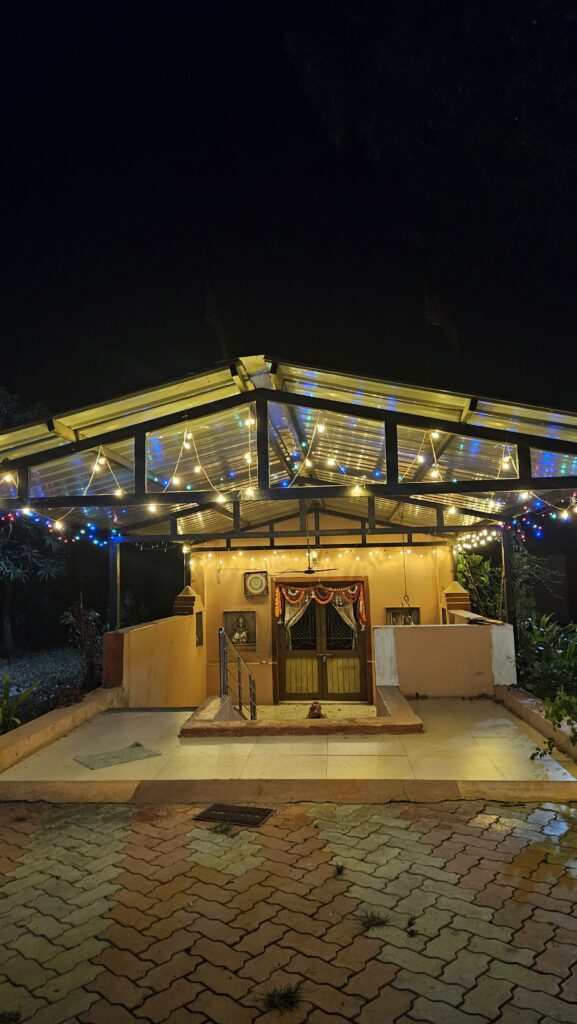
If you’re starting from Tilakwada, then your stops will begin from Vasudev Kutir Ashram and end at Sitaram Bapu Ashram.
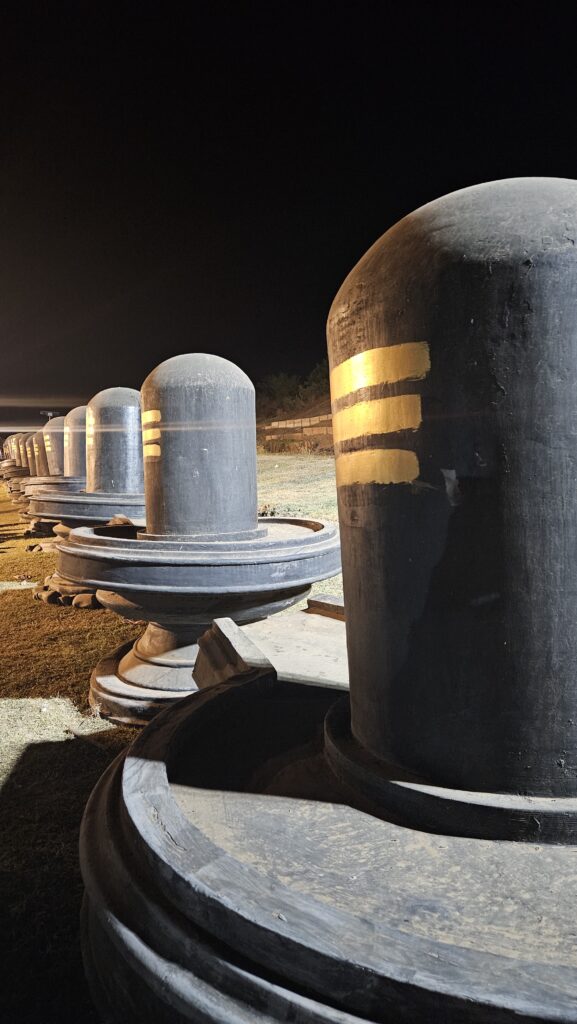
Personal experience of Uttarvahini Narmada Parikrama
It was one of the most profound journeys I’ve taken. My family and I began the parikrama from Rampura at 8 pm on its very first day, and from the first few steps itself, there was an immediate sense of calm. The path took us through open fields, temples and mud houses under a night sky. A cool breeze carried the touch of the Narmada before it reached us, and somewhere along the way, I realised that everyone walking beside me was feeling it too. There was no rush, no noise — just the soft, continuous chant of “Narmade Har” moving with the river, as if the entire path had found a shared divinity.
As the night deepened, our brief halts at Mahadev temples became moments of pause rather than stops where silence filled the air, broken only by the distant mooing of cows in the fields. Near Tilakwada, the mood of the Narmada shifted; the wind grew stronger, and the gushing sound of the river became more pronounced. Crossing the sandbag bridge here, the route changed character, cutting through long stretches of banana fields. Somewhere along this path, at the Maninageshwar temple, locals offered apple juice, chai, and mamra. A generous gesture that gave us the energy to continue.
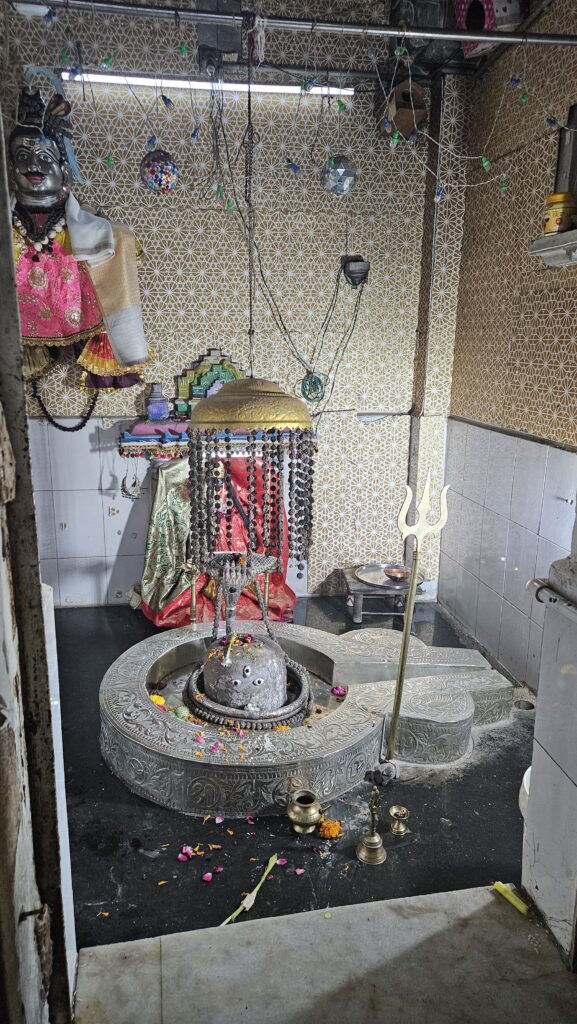
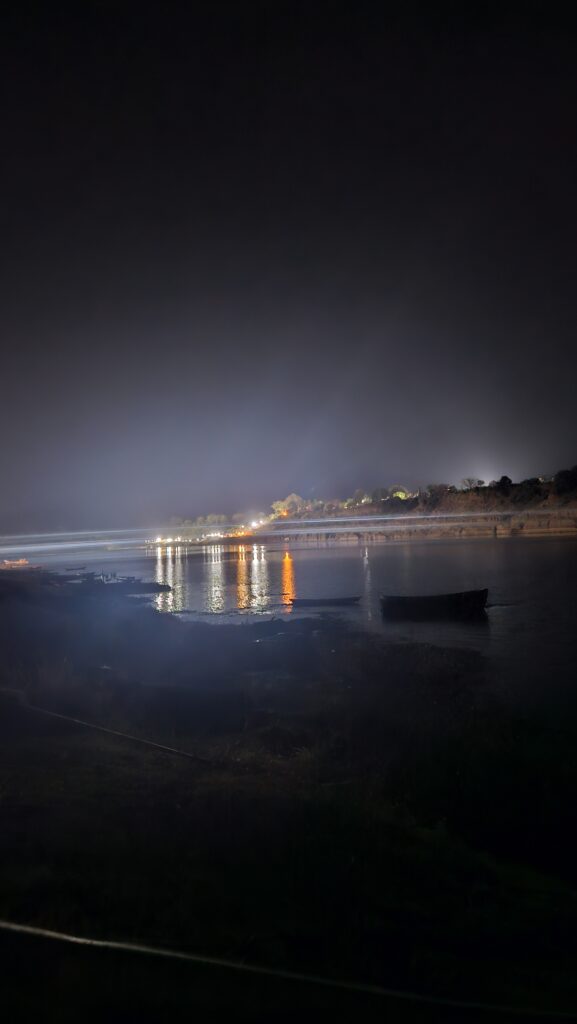
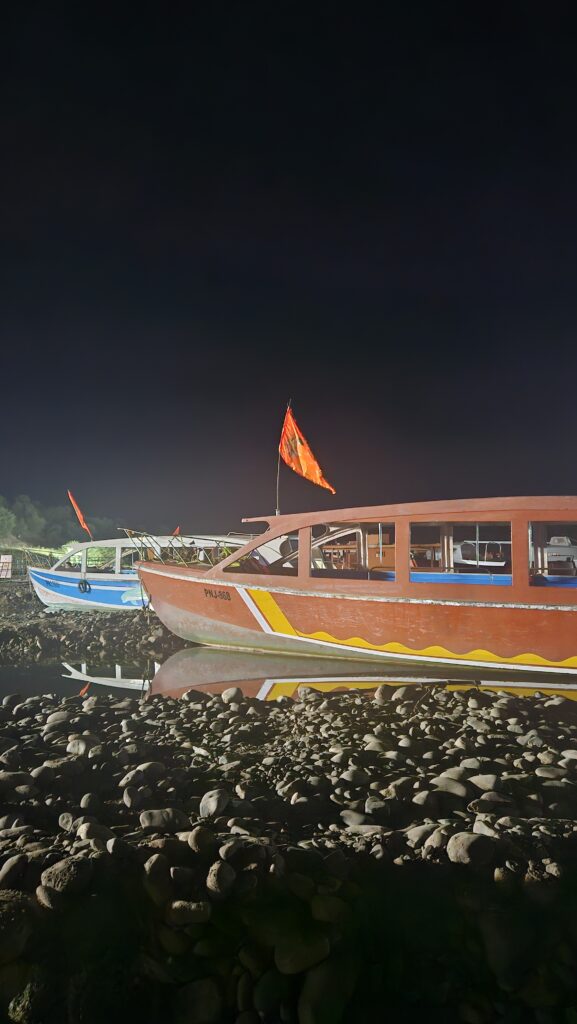
From there, the walk stayed close to the river, always on our right, flowing steadily beside us. Near Vasan ghat, we paused for a few minutes and lit a diya we had carried along. As we approached Rampura from the opposite bank, the sight of boats lined along the shore signalled the nearing end. Usually, there are long queues here; however, arriving early in the yatra meant we could cross without much waiting. And just like that, with a quiet crossing over the water, the parikrama came to a close.
Lessons from the path
What stayed with me throughout was not just the spiritual energy of the journey, but the warmth of the people along the way. The generosity of locals, offering food and care without expectation, is something you carry back with you. The only jarring note, however, was the sight of litter scattered across fields and paths. In a journey rooted in devotion and respect, it felt out of place. If anything, the parikrama gently reminds you that reverence isn’t just in prayer, it’s also in how we treat the land we walk on.


Leave a Reply